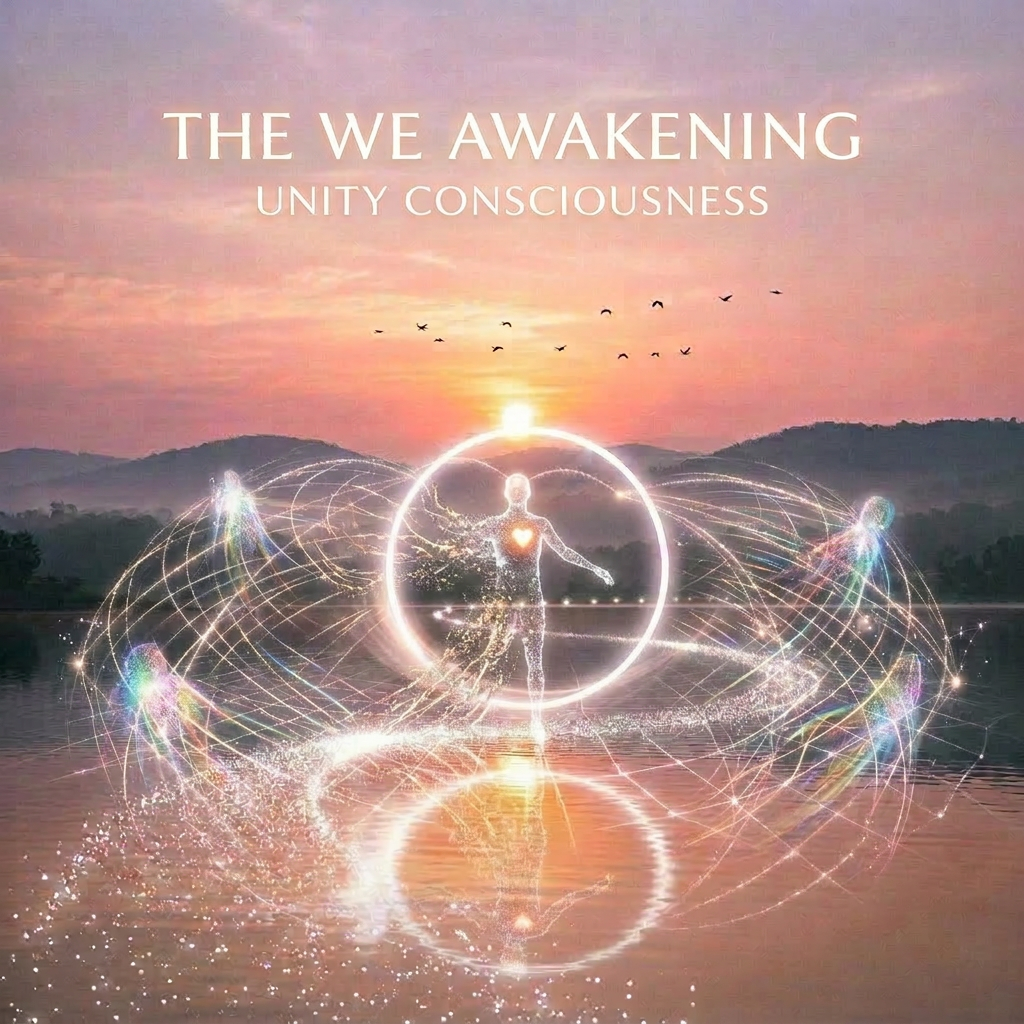
Sangh Sadhana:From “I” to “Self” to “We”
Tracing the movement of Dharma from the individual to inner awareness, to collective life
Hindu Dharma has always viewed life as a movement—one that begins with the individual, deepens through inner awareness, and ultimately finds expression in collective life. It is not merely a system of belief or ritual, but a way of living that seeks harmony between personal discipline and shared responsibility. For this reason, sadhana in the Hindu tradition has never been confined to solitary spiritual pursuit alone. Alongside inner effort, there has always been an emphasis on sangh sadhana—the shaping of character and consciousness through life lived together.
Sangh sadhana unfolds gradually. It does not demand abrupt change, nor does it impose ideals prematurely. It begins where each person stands, moves inward with clarity, and then naturally extends outward. This journey may be understood simply as a progression from “I”, to “Self”, to “We.”
Refining the “I”: The Discipline of Foundations
Every meaningful journey begins with the individual. The “I” represents one’s habits, tendencies, physical presence, and everyday conduct. Hindu Dharma neither dismisses the individual nor places the individual at the center of everything. Instead, it seeks refinement.
At this stage, sadhana is practical and grounded. Regularity, discipline, physical well-being, clarity in conduct, and respect for time and responsibility form the essential foundation. This discipline is not imposed externally. It is accepted willingly as a means of bringing order and steadiness within.
A refined “I” is dependable and balanced. Such a person does not react impulsively or act carelessly. Strength is accompanied by restraint, and confidence is tempered by humility. Without this foundation, higher values remain abstract. With it, they begin to take shape in daily life.
Awakening the “Self”: From Routine to Awareness
When discipline becomes stable, a quieter transformation follows—the awakening of the Self. Here, “Self” does not point only to philosophical ideas, but to awareness rooted in dharmic understanding.
Life is no longer guided solely by convenience or personal preference. The individual begins to reflect more deeply:
What lies beyond my immediate concerns?
How does my conduct influence the larger whole?
At this stage, Dharma ceases to be something practiced occasionally or inherited unconsciously. It becomes a deliberate orientation of life. Actions align more naturally with values. Responsibility no longer feels like obligation; it feels intrinsic.
The awakened Self understands that Dharma is sustained quietly—through consistency in family life, integrity in work, steadiness in relationships, and willingness to serve. It does not rely on assertion. It endures through lived example.
From Shakha to Sangh: Learning to Become “We”
The movement from “I” and “Self” into “We” does not occur automatically. It requires a live environment where discipline and awareness are practiced together. This is the role of shakha.
Shakha is not merely a routine gathering. It is the first experience of sangh life in practice. Through shared time, common discipline, and collective participation, the individual begins to understand what it means to belong without losing oneself, and to contribute without seeking prominence.
In shakha, differences of background, temperament, and ability remain, but they gradually recede behind a shared rhythm. The emphasis is not on assertion, but on alignment; not on instruction alone, but on example. Slowly, self-reference gives way to collective awareness.
Over time, shakha is no longer confined to a physical space or fixed hour. Its values begin to shape conduct beyond its immediate setting—in family life, at work, and in social interaction. When this happens, shakha naturally expands into sangh.
Sangh is not simply an organization one belongs to. It is a state of collective consciousness. It is shakha carried into life. The sense of “We” first experienced in a small circle becomes steady and inclusive, capable of sustaining responsibility without constant guidance.
This transition—from shakha to sangh—is central to sangh sadhana. Without shakha, “We” remains an idea. Without sangh, shakha remains limited. Together, they form a continuous path where individual growth and collective strength reinforce one another.
Service: Dharma Made Visible
Sangh sadhana finds its natural expression in service. This service is neither charity driven by superiority nor activity performed for recognition. It arises quietly, as an extension of responsibility.
Through education, social support, relief efforts, or simple acts of care, service becomes the practical language of Dharma. It links inner values with lived reality. It ensures that collective life remains relevant, compassionate, and grounded.
When service flows from sangh life, it carries a distinct quality—steadiness without display, commitment without noise. It strengthens both the individual and the collective, while allowing dharmic values to speak through action rather than proclamation.
A Mature “We”: Continuity Beyond the Individual
The culmination of sangh sadhana is a mature sense of “We.” At this stage, identity is no longer limited to personal ambition or even organizational affiliation. One begins to see oneself as a link in a longer, ongoing tradition.
This awareness does not emerge suddenly. It is shaped through sustained discipline, inner clarity, and lived collective experience. Personal ego recedes naturally. What remains is a quiet readiness to contribute, to sustain, and to pass forward what has been received.
Such a “We” is stable and enduring. It does not depend on urgency or slogans. It continues through example, consistency, and intergenerational transmission.
Conclusion
Sangh sadhana is neither a program nor a phase. It is a lifelong alignment—within oneself and with others. It does not diminish the individual, nor does it dissolve the collective. Instead, it harmonizes both through a clear and natural progression.
Rooted in discipline, awakened through awareness, trained through shakha, expanded into sangh, and expressed through service, sangh sadhana sustains Dharma quietly and steadily across time.
Summary: From “I” to “Self” to “We”
I
The disciplined individual—stable, responsible, and grounded.
Self
Awakened awareness—where Dharma becomes a conscious orientation of life.
We
Collective life—formed through shakha, matured as sangh, and expressed through service.
This is the essence of sangh sadhana: from I, to Self, to We.
I do not write as one who has arrived, but as one who continues to walk the path. If these reflections inspire even a moment of thought or self-inquiry, they have fulfilled their purpose
Walking the Paths, one step at a time.
— Apoorv Shrivastava
ॐ तत् सत


Leave a Reply